Related pages
2011 Tablet Comparison Chart

A review of our recommended tablets

Our prediction for the top selling tablets of 2011


Medbill.co.uk

Alex Fergusson Architects

Tablet Platform Comparison


First Intro and Background | Apple iOS | Android | Windows | Alternatives Summary


Windows

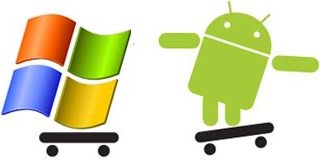
Apart from the problems with viruses mentioned in the introduction, Windows vs Android logo in skateboard competitionWindows also has support for legacy features (those maintained to ensure compatibility with older applications, documents and users). Some cynical outsiders suspect that there are some legacy processes running in Windows that no one - not even in Microsoft - remembers. They just daren't take them out in case something breaks. So the platform (sometimes called Operating System - "OS") is bloated taking lots of memory, storage and CPU. Tablets and slates are meant to be small and battery-efficient. This is a basic mismatch, but there are some potential solutions:

1. Go ahead anyway and make the tablet even though it will be heavy, hot and sloIconia W500 with keyboardw. A number of tablets like this may have failed to make it to market because of heaviness, hotness or slowness.

But pictured here is probably the best that's available just now - the Acer Iconia W500. Also pictured is the keyboard dock which is often needed as one other feature of Windows is that it is not designed for use with fingers and an on-screen keyboard - at least not in the way that Android and iOS have been designed from the start with touchscreens in mind.

So, this kind of Windows tablet will run a full version of Windows, for instance Windows 7 Professional. This OS will only run on Intel processors, which are themselves less efficient than the competing ARM designs adding further to the heating effects and short battery life. These tablets often need some sort of cooling vent - the Iconia W500 has one - and maybe a tiny fan to keep the processor cool. These extras, of course add even further to the heaviness and hotness of the tablet as you hold it in your hand.

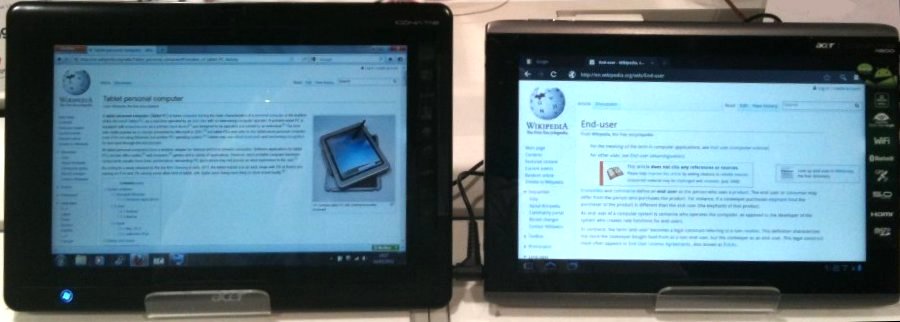
Acer w500 Windows vs the A500 running AndroidAcer also sell an Android Iconia - the A500. Here they are next to each other in a shop selling for the same price. The Windows tablet, on the left, is physially larger and twice the weight although they have the same screen size (10.1"). The Windows version also has half the battery life of its brother. Apparently, the Android A500 is outselling the W500 by four to one.

So why would you buy the Windows version? The answer is that all your old and familiar applications will work, not to mention, all the USB peripherals - like the older printers!

2. Use a different platform altogether - but one which is still called Windows. There are at least three flavours, as follows:

Windows 7 Starter. This requires only 1 Gb of short term memory (RAM). That's less than for Windows 7 Pro, but the OS lacks some of the bells and whistles and visual effects of the full version and most significantly, it's limited to 3 concurrent processes. Despite this, it still needs an Intel processor.

Windows CE. This will run on an ARM processor and has been around for quite a while. It's been tested in action. The trouble is, it's been found wanting. It is pretty much a complete re-write, but one concentrating on leading the user through to applications elsewhere rather than hosting them on the local device. It started life as an OS for a "thin client" paired with a more beefy server to run business applications or perhaps as a gateway to the internet at an Internet Cafe.

Windows Phone 7. This is Microsoft's phone OS. While it's not so bloated, again it's not so popular either. In principle, this platform has just been boosted by the forming of an alliance between Microsoft and Nokia to use Windows Phone 7 on their phones - and later on their tablets.

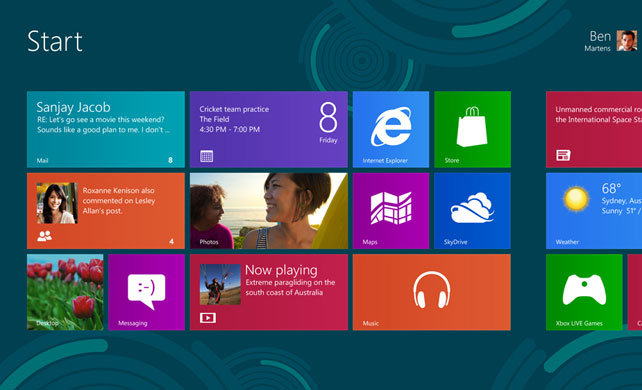
Microsoft and Intel are both trying to resolve these issues, but progress seems to be agonisingly slow. Recently the only sign of life has been a string of statements as to whether - or not - the new new version of Windows will be called Windows 8; whether - or not - it will be released in 2012... on ARM processors - or not; and whether it will be able - or possibly unable - to run legacy applications. It has, at least been demonstrated at the Computex trade show in Taipei.

While Microsoft have made lots of money out of the Windows franchise in the past, now they are perhaps paying the price. The techies that Microsoft seemed to want to ignore are out for revenge. Not only do the Pro and Starter versions of Windows have to labour under a constant threat from viruses, but no Microsoft OS will ever attract hoards of enthusiastic App writers and there's no proper App Store for them. There's also perhaps an intangible feeling on the street that's now resolved to be against Microsoft and would be against them even if they produced something fantastic. I think it's fair to say that Microsoft haven't tested our resolve by producing anything very fantastic so far. 

First Intro and Background Apple iOS Android Windows Alternatives Summary


blog comments powered by Disqus