Summary of the Past Year
At the end of 2011, sales were dominated by the iPad 2 with the competition led by the RIM Blackberry Playbook, the hybrid Asus Transformer and a range of Galaxy products from Samsung, led to many people's surprise, by the baby of the family - the 5.3" Galaxy Note. This last was widely dismissed as just a phone really, but it now looks to be spawning a whole new family of gadgets by the name of phablets. Sales of Amazon's Kindle Fire were initially quite strong in America, but the gadget was not sold in the UK, perhaps because of the complex legally issues around the rights owed for the rich range of films and e-Books that populate Amazon's ecosystem. |
Since Apple still holds the lead by sales in September 2012, we'll start this year's run-down with the New iPad 3 (officially, the 3 is not part of its name, but not many people have noticed). This has a quite ridiculously high screen resolution, and can use the LTE 4G network - which we in the UK unfortunately don't have yet. Even the fabulous screen, with its significantly increased demands on the battery is a bit of a double-edged sword as we discussed *here*. Apple continue to sell the iPad 2 and many are looking on this product, which shares the strong IOS platform, with a new-found fondness.
With the much-rumoured baby iPad not yet announced, the field has been left open for the UK launch of the Kindle Fire HD. This is a much improved version of last year's original and, with the weight of Amazon's selling machine behind it, and an attractive price, this product will be offering Apple more competition than they've had before. The Fire runs a heavily disguised version of Google's Android platform.
Both Apple and Amazon chose to announce their new offerings at their own stage-managed US press launches rather than at the IFA. This left the field at the Berlin event to be dominated by the new kid on the block - Samsung. On the back of the huge success of their Android smartphones, led by the S3, Samsung are fielding a wide range of tablets. Their sales success has given Samsung the confidence to shrug off recent setbacks in their long-running patent war with Apple and Apple should be keeping a very careful eye on how these patent antics play to potential new buyers of their products outside the US.
Samsung's top tablet at the IFA is probably the new, larger 10-inch Galaxy Note.
This has an extension to the Android platform which allows two apps to be visible side-by-side, and allows users to copy some things between the apps. This seems like quite a significant step forward, and together with the handy stylus to compliment the finger-touch screen, they make the Note into a compelling offering. Also announced, but not actually available yet, is a new version the original phablet-sized Note - this time it's a tiny bit larger still with a 5.5-inch screen.
Another of last year's favourites has also been upgraded with Asus offering a new higher-resolution version of their Transformer - called the Transformer Infinity. This again comes with the very clever battery-toting keyboard accessory. For the business user, this offers a neat way to move via virtualised access to their old Windows systems towards a much more mobile future. At least, it would offer that if we could buy them, but, not for the first time, availability of this new Asus product in the UK is very limited.
Amid all this, two of the biggest players have struggled to hold the spotlight, but
Google's first tablet to be sold direct has been faring well. The Google Asus Nexus 7 is a pretty neat 7-inch offering which is the first to come with Android Jelly Bean (aka version 4.1). Although the changes compared with the earlier Android (Ice Cream Sandwich or 4.0) are quite small, Jelly Bean does justify Google's claim that it is close to being a mature platform for tablets as well as smartphones.
There are some pretty powerful machines here and perhaps for the first time, an Android tablet might be for life and not just for Christmas.
And last - but maybe not least (?) - comes the old kid on the block - Microsoft, this year hoping (again) to break into the touch-screen market with their new Windows 8 operating system. Sadly, they have (again) rather fumbled the launch with Windows 8 promised in two flavours: the RT version for devices powered by the extremely popular Arm family of chips; and the Pro version which will come later powered by Intel chips and supporting Windows' vast war chest of legacy applications.
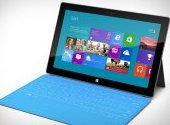 The first RT tablet is to be the Microsoft Surface, but as its actual release date nears, we are still in the dark as to some of the specifications, and the jury is still out as to whether Microsoft have finally cracked their big problem of managing to get the battery life up to acceptable levels. The first RT tablet is to be the Microsoft Surface, but as its actual release date nears, we are still in the dark as to some of the specifications, and the jury is still out as to whether Microsoft have finally cracked their big problem of managing to get the battery life up to acceptable levels.
Other promising Windows 8 products are waiting in the wings like the Samsung Ativ. But realistically, these are still the jam tomorrow, or, more likely, next year. |